Carrier networking

Virtual CGNAT

Carrier-grade address translation delivered as software on standard x86 servers.

  • NAT44
  • NAT444
  • NAT64
  • DS-Lite
  • PBA
  • Deterministic NAT
  • PCP
  • IPDR
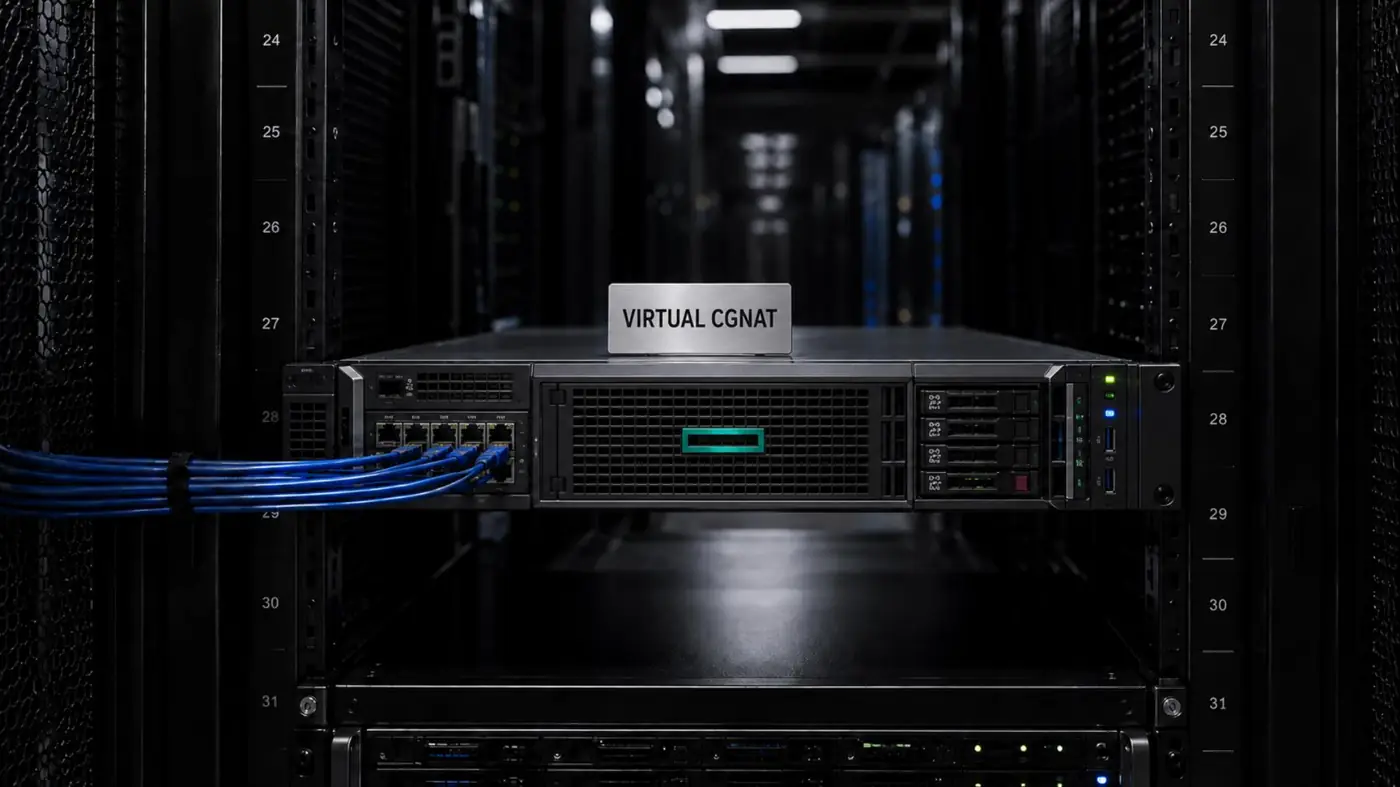
A 2U x86 server labelled Virtual CGNAT mounted in a data centre rack

Grow subscribers, not IPv4 spend. Virtual CGNAT combines DPDK-accelerated address translation, routing, stateful resiliency and real-time visibility in one software platform that runs on validated HPE ProLiant and other x86 servers.

400 GbpsThroughput on a single x86 server
322.6MConcurrent sessions
2.21MNew sessions per second
1.02BPackets per second
Capabilities

What it does

  • NAT44, NAT444, NAT64 and DS-Lite translation models
  • Port Block Allocation, deterministic NAT and per-subscriber port limits
  • Endpoint-independent mapping and filtering, hairpinning and selective ALGs
  • Stateful active-active or active-standby HA with NAT state replication
  • BGP, OSPF, ECMP, BFD and VRRP; dynamic advertisement of public pools
  • Port Control Protocol and static mappings for inbound services
  • IPDR records over IPFIX, NetFlow, Syslog and RADIUS for lawful traceability
  • Central management, Web UI and CLI, SNMP (NATV2-MIB) and Zabbix
Network role

Where it sits

Deployment

  • Bare metal, virtual machine, NFVI, telco cloud and private cloud
  • KVM, OpenStack, Proxmox, oVirt and Docker
  • Inline or NAT-on-a-stick at BNG/BRAS, internet edge, PGW/UPF or regional POP
  • Scale up per server, or scale out with BGP and ECMP to multi-terabit
Standards

Standards and evidence

Virtual CGNAT standards and evidence
CapabilitySpecificationVersionStatus
NAT44 behaviourRFC 4787 · 5382 · 5508 · 6888 · 7857—Supported
NAT64RFC 6146—Supported
Deterministic NATRFC 7422—Supported
Port Control ProtocolRFC 6887—Supported
NAT MIB and loggingRFC 7659 · 7011 · 3954 · 5424—Supported
FAQ

Questions operators ask

How much traffic can Horizon Networks Virtual CGNAT handle?

Up to 400 Gbps on a single validated x86 server, with 322.6 million concurrent sessions, 2.21 million new sessions per second and 1.02 billion packets per second. Performance depends on the hardware profile, traffic model and enabled functions.

Which translation models are supported?

NAT44, NAT444, NAT64 and DS-Lite, with port block allocation, deterministic NAT (RFC 7422) and per-subscriber port limits.

How does Virtual CGNAT keep sessions alive during a failure?

Through stateful active-active or active-standby high availability with distributed NAT state and port-allocation replication, combined with BGP, ECMP, BFD and VRRP.

Can subscriber sessions be traced for compliance?

Yes. IPDR records for address mapping, port mapping, full session and port block allocation are exported over IPFIX, NetFlow, Syslog and RADIUS, and deterministic mappings can be reconstructed.